

RAG Development Services — Retrieval-Augmented Generation for Enterprise AI
Build enterprise RAG systems that deliver up-to-date answers grounded in your documents

WebbyCrown Solutions provides RAG development services for organizations that need accurate answers from internal knowledge—without relying only on static training data. We design and implement retrieval augmented generation workflows that pull relevant documents from your knowledge bases, document repositories, and approved data sources, then generate responses using large language models with clear grounding.
- Enterprise-grade rag solutions and end-to-end rag implementation
- Retrieval built on semantic search, keyword search, and hybrid search
- Secure knowledge access for proprietary data and sensitive information
- Scalable rag pipelines with monitoring for quality, latency, and cost
Talk to Our RAG Experts
What is retrieval-augmented generation (RAG) in 2026?

Retrieval augmented generation (RAG) is an approach where an AI system first retrieves relevant content from approved sources, then generates an answer using that content as context. This makes responses more grounded than answers generated only from a model’s training. Microsoft describes common RAG techniques such as chunking, full-text search, vector search, hybrid search, query rewriting, and re-ranking as core parts of modern RAG pipelines.
In simple terms, RAG helps answer a user’s question by:
- understanding user input and shaping it into searchable intent
- retrieving search results from the right sources
- using retrieved context to support generating responses and generate answers that align with policy and documentation
How Retrieval Augmented Generation Works
From user queries to context-aware responses
RAG solves a practical enterprise problem: most important answers live in your documents, not in a model’s training set. With RAG, the system uses information retrieval to bring the right passages into context before generating a response.

A production RAG flow looks like this:
- A user submits user queries (the user’s question and any constraints).
- The system parses the user input and applies routing rules.
- The retrieval layer searches across data sources using semantic search (meaning-based) and keyword search (exact terms).
- In hybrid search, both are combined to improve recall and precision.
- The system selects the best retrieved information and cites or references it internally.
- The LLM uses the retrieved context to produce context aware responses aligned to business context, policy, and tone.
This is how retrieval augmented generation work becomes dependable: it retrieves the best supporting content first, then generates the answer.
RAG Solutions We Build
Practical RAG capabilities for enterprise knowledge and business workflows
WebbyCrown Solutions builds rag systems that can handle enterprise constraints: permissions, scale, performance, and change. Our rag solutions help teams retrieve knowledge faster, reduce time spent searching, and improve consistency.
Enterprise knowledge assistants
- “Chat over your policies” across knowledge bases and document repositories
- Role-based knowledge access for teams and departments
- Answers with source-backed reasoning based on retrieved passages
Customer support knowledge retrieval
- Assist agents with the most relevant SOPs and troubleshooting steps
- Reduce escalation time by retrieving the right fix quickly
- Improve operational efficiency by standardizing answers
Research and analysis copilots
- Summarize research reports and internal decks
- Compare documents and identify differences across versions
- Deliver relevant information to decision makers faster
Sales enablement and proposal support
- Retrieve product specs, pricing rules, and case studies
- Generate proposal drafts grounded in approved content
- Reduce rework and improve response speed
IT and operations runbooks
- Retrieve incident runbooks and postmortems
- Provide “next steps” from approved documentation
- Support on-call teams with faster knowledge retrieval
Collaboration tools integration
We can integrate RAG into collaboration surfaces (like Microsoft Teams) when it fits your workflow, so people can retrieve knowledge without leaving the tools they use daily.
Domain examples (for domain specific knowledge)
We support domain knowledge repositories, such as product manuals and standards libraries—for example, documentation for Bürkert Fluid Control Systems.
RAG Architecture at Enterprise Scale
Advanced retrieval, vector databases, and a secure retrieval layer
A modern rag architecture is not just an LLM plus a vector store. It’s a disciplined system with data preparation, retrieval engineering, evaluation, and governance.
Core components we design

Data preparation and ingestion
- Collect content from multiple sources (wikis, PDFs, CMS, shared drives, ticket systems)
- Normalize and enrich metadata (owner, department, permissions, timestamps)
- Prepare content chunks that match your query patterns
- Keep a clear plan for new data and updates

Numerical representations and indexing
- Convert text into numerical representations (embeddings) for semantic retrieval
- Store vectors in vector databases and maintain metadata filtering
- Support vector search plus keyword search for better results

Retrieval layer and re-ranking
- Build a robust retrieval layer with filters, reranking, and policy rules
- Combine advanced retrieval methods (hybrid + metadata + reranking) to improve accuracy
- Optimize for retrieval accuracy and stable relevance across changing content

Generation and safety controls
- Use generative ai with large language models to produce answers grounded in retrieval
- Add guardrails: refusal patterns, content filters, and “answer only from retrieved context” modes
- Support multiple formats (short answers, step-by-step, citations, summaries)

Performance, cost, and reliability
RAG can raise computational and financial costs if retrieval and generation are not tuned—especially at enterprise scale. We manage cost through caching, chunk sizing, retrieval limits, and model routing.
Optional: fine-tuning vs RAG
We may recommend fine tuning when the primary need is style consistency or domain behavior—but for fresh knowledge, RAG usually wins because it can reference updated documents without retraining.
RAG Development and Implementation Process
From proof-of-concept to enterprise rollout
Our delivery approach is built around reliability and evidence—key to E-E-A-T.
01

Discovery and business context
- Map business workflows and top user questions
- Define what “correct” means (factual accuracy, completeness, format)
- Identify target knowledge bases and document repositories
02

Source onboarding and data readiness
- Connect approved data sources (including legacy systems where required)
- Design permissions and knowledge access rules
- Document ingestion, cleaning, and metadata strategy
03

Retrieval pipeline engineering
- Build rag pipelines with hybrid search, semantic search, and metadata filtering
- Evaluate query rewriting and reranking
- Tune for retrieval accuracy and relevance
04

RAG model behavior and safety
- Configure prompt templates and grounding rules
- Decide when the system should refuse or ask follow-up questions
- Ensure answers are traceable to retrieved information
05

Integrating RAG into systems
- Integrating rag into portals, intranets, CRM, or Teams
- Implement seamless integration via APIs and authentication
- Ensure output formats match real business workflows
06

Production monitoring and continuous improvement
- Track retrieval quality, failure cases, and drift
- Update pipelines as new data arrives
- Maintain operational standards for enterprise scale
This is the difference between a demo and real rag development: engineering, evaluation, and governance that holds up in production.
Security, Governance, and Evaluation
Protect sensitive information and improve factual accuracy
Enterprise RAG must be secure and auditable.
Data security and proprietary data boundaries
- Role-based access aligned to source permissions
- Separation of public vs restricted content
- Auditable logging for access and retrieval results
- Clear handling rules for sensitive information and proprietary data
Evaluation and quality gates
We measure what matters:
- Retrieval accuracy (did we fetch the best supporting passages?)
- Factual accuracy (does the final answer match retrieved context?)
- Failure-mode analysis (missing documents, outdated documents, ambiguous user input)
Traceability and transparency
A strong RAG system should be able to show the relevant documents and passages used to form the answer (internally, and to users where appropriate). This improves trust and supports compliance.
Digital Success Stories That Drive Results
See how we’ve helped startups and enterprises scale smarter—reducing costs, improving efficiency, and shipping reliable software across web, mobile, eCommerce, SaaS, and AI.

NAILD.de – Custom Shopify Store for Nail Salon (DACH Press-On Nails)
Solution
Multi-language, currency & bundling on Shopify


Custom WooCommerce Store for Peerless Umbrella (B2B & Wholesale)
Solution
WooCommerce with role-based pricing, AI & smart tools

Magnificette – A Headless eCommerce Platform for Electronic Components
Solution
Headless eCommerce with Bagisto backend & Next.js frontend


SUMHIIT Fitness Website Case Study: Expert Tips and Insights on High-Intensity Workouts
Solution
35‑minute HIIT workout sessions combining strength

Why WebbyCrown Solutions
Engineering-led RAG development with enterprise readiness
When evaluating rag development companies, it’s not enough to compare “features.” You need proven ability to build secure retrieval pipelines, integrate with enterprise systems, and measure accuracy.
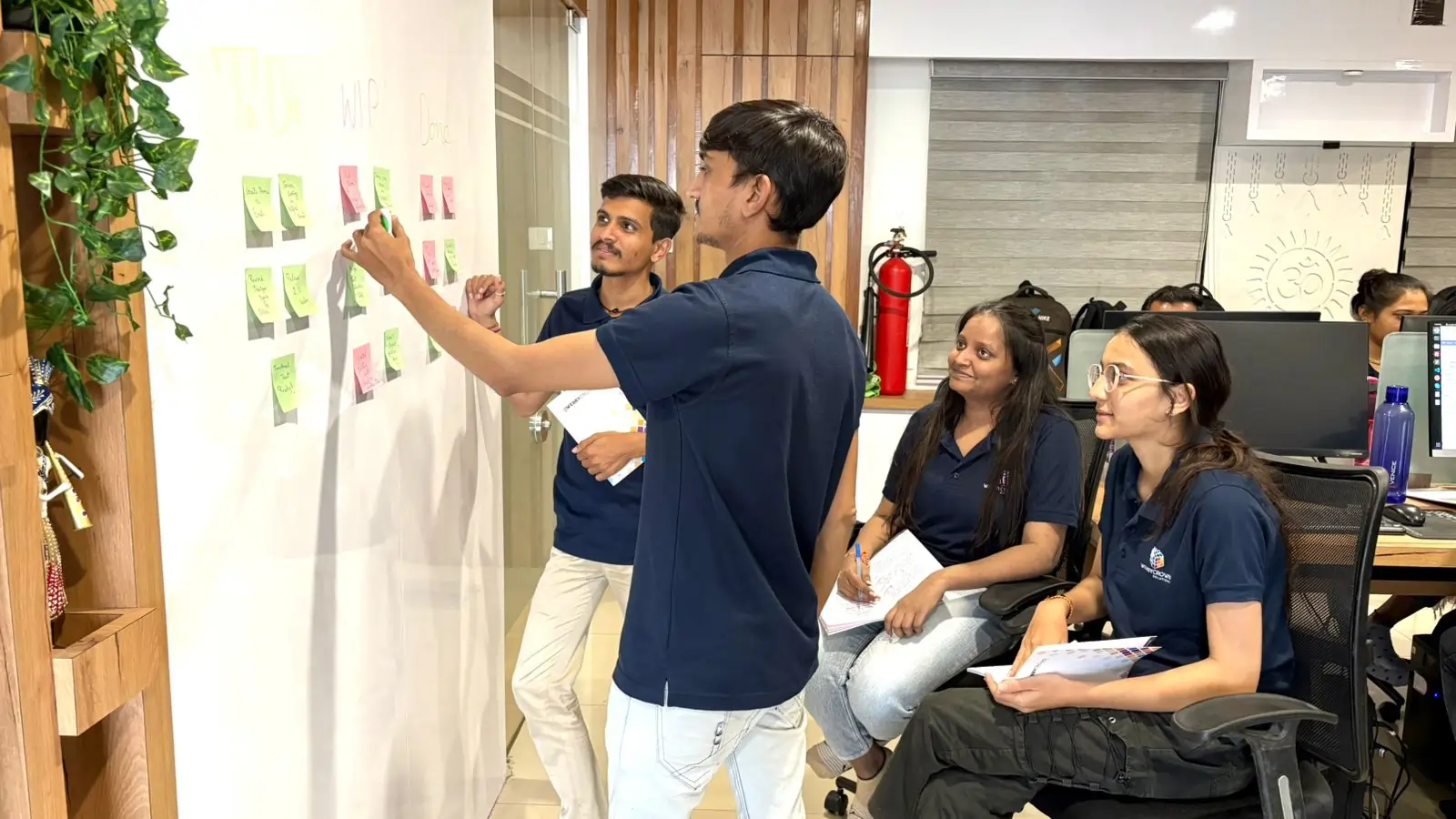
WebbyCrown Solutions focuses on:
- Practical ai solutions built on generative ai with measurable outcomes
- Enterprise-scale architecture and operational discipline
- Clear documentation and delivery artifacts (evaluation reports, retrieval tests, governance checklists)
- Collaboration with your internal ai teams to transfer ownership safely
How to evaluate top RAG development companies (buyer checklist)
Look for: security model, retrieval evaluation, enterprise integration experience, and transparency around cost and performance.
Ready to build RAG systems you can trust?
If you want enterprise-grade retrieval augmented generation with measurable accuracy and governance, WebbyCrown Solutions can help you design, build, and operate it.
Frequently Asked Questions
What are RAG development services?
RAG development services include designing and building retrieval pipelines, connecting enterprise data sources, implementing RAG architecture, and deploying systems that answer user queries using retrieved documents.
How does retrieval augmented generation reduce outdated data problems?
RAG retrieves relevant documents at query time, so answers can reflect new data and updates—rather than relying only on static training data.
What’s the difference between semantic search and keyword search?
Semantic search finds meaning-similar content using vectors/embeddings, while keyword search matches exact terms. Hybrid search combines both to improve results.
Do we need a vector database for RAG?
Not always, but many RAG systems use vector databases to support vector search for semantic retrieval at scale.
Should we choose RAG or fine tuning?
Use RAG when you need up-to-date answers from documents. Use fine tuning when you need consistent style or behavior—often alongside RAG for best results.
How do you control computational and financial costs?
We tune chunking, retrieval limits, caching, and model selection so costs scale predictably while maintaining retrieval accuracy.
Can you integrate RAG into Microsoft Teams or existing systems?
Yes. We can integrate RAG into collaboration tools and existing business systems through secure authentication and APIs, supporting seamless integration.
How do you protect proprietary data and sensitive information?
We design access controls aligned to source permissions, implement auditing, and define governance rules for sensitive information and proprietary data.