Summarize This Article With AI
If your company is building, shipping, or using artificial intelligence in products, internal tools, or customer workflows, 2026 is the year to get operationally ready. The EU AI Act (also called the AI Act) introduces a risk based approach that requires teams to treat AI systems like regulated capabilities: you must document them, test them, monitor them, and prove governance is working in real operations.
This guide is a practical EU AI Act readiness checklist for 2026. It is written for product leaders, engineering heads, security teams, and compliance owners who want clear, repeatable steps.
Why EU AI Act readiness matters for your product team
Many teams assume the regulation only applies to companies headquartered in the European Union. In reality, it can still affect you if you sell to EU customers, operate in EU markets, or provide AI features used by EU users. Even if your business is global, aligning with AI regulation expectations improves reliability, reduces incident exposure, and strengthens enterprise trust.
A strong readiness program also creates a measurable competitive advantage: procurement teams increasingly ask for AI governance evidence before signing contracts.
The EU AI Act risk categories product teams must understand
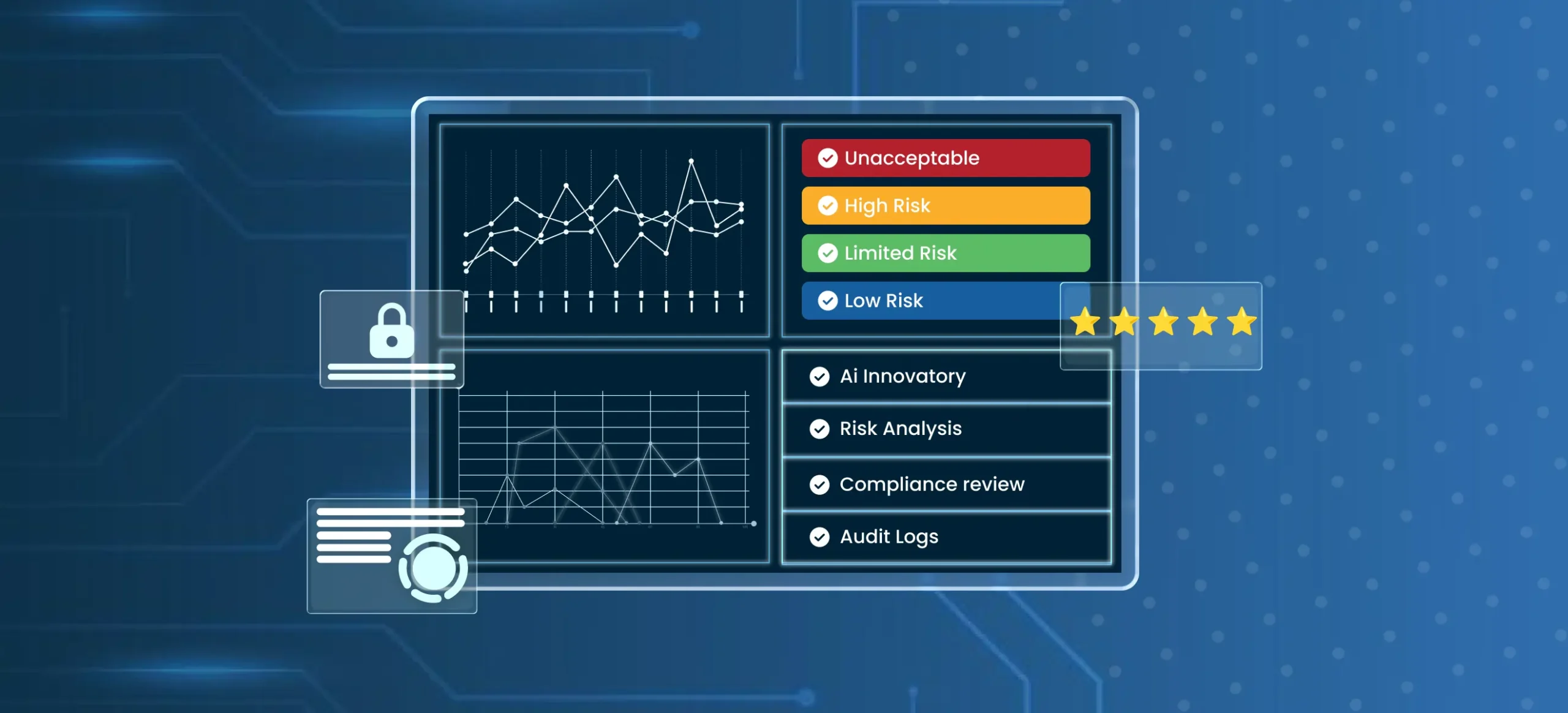
The EU AI Act organizes AI into risk tiers. This is the foundation for prioritization, effort, and compliance planning.
- Unacceptable risk: systems and behaviors considered unacceptable risk fall under prohibited ai practices and must not be placed on the market or used in the EU.
- High risk: high risk ai systems face the most detailed obligations across governance, documentation, monitoring, and oversight.
- Limited risk: specific transparency obligations apply, especially when systems interact with users.
- Minimal risk and low risk: fewer legal requirements, but teams still benefit from governance and monitoring.
In practice, most product roadmaps should start with clear risk classification for every AI capability and map it to these risk categories.
Step 1: Create an AI inventory across products and internal systems
You can’t govern what you can’t list. A complete inventory is the backbone of eu ai act compliance.
Deliverable: AI system inventory
Include, for every AI feature:
- system owner and accountable team
- the system’s intended purpose and impacted users
- which AI models are used and where they run
- key integrations and third-party dependencies in the supply chain
- data sources and key input data fields
- where the system is deployed and which markets it serves
This inventory should include customer-facing features, internal copilots, chatbots, automations, classifiers, recommenders, and analytics models.
Step 2: Classify each use case using risk classification and impact
Once the inventory exists, apply risk classification and record the justification.
Deliverable: Use-case classification sheet
For each system, document:
- which risk category it falls into
- the business impact level and who is affected
- whether it could be considered high risk
- what harm could occur, including impacts to fundamental rights
- whether decisions are automated or assistive
This step is where product teams often redesign features to reduce risk. For example, an “assistive decision support” pattern may avoid a high risk category where a fully automated decision would not.
High-risk areas often include:
- worker management and employment decisions
- access to essential private services
- certain public services
- critical infrastructure
- safety components in regulated domains, including some medical devices
- high-impact education and vocational training contexts
Step 3: Check for prohibited AI practices and unacceptable risk patterns
Before investing in documentation and controls, confirm you are not building something prohibited.
Deliverable: Prohibited practices review
Assess whether any AI feature could be interpreted as:
- social scoring
- manipulative or deceptive practices at scale
- high-risk biometric or sensitive inference patterns that trigger bans or strict constraints
- patterns that fall into unacceptable risk
If any system is close to prohibited territory, remove or redesign it early. Late-stage compliance rework is costly.
Step 4: Assign governance ownership and decision rights
Governance fails when no one owns approvals, monitoring, and incident response.
Deliverable: Governance operating model
Define:
- who approves new AI use cases
- who approves model updates, prompt changes, and retrieval changes
- who owns logging, monitoring, and reliability targets
- who handles incidents, escalations, and customer communication
- what requires security, legal, or compliance sign-off
A practical model:
- Product: intended purpose, UX, user transparency, impact assessment
- Engineering: testing, deployment controls, monitoring, rollback
- Security: access controls, audit logs, vendor review
- Legal/Compliance: obligations mapping, evidence sufficiency
- Data: data governance, data quality, dataset documentation
Step 5: Implement a risk management system that runs continuously
A one-time assessment is not enough. A real risk management system is a living process.
Deliverable: Risk register and risk treatment plan
For priority systems, document:
- failure modes and misuse risks
- likelihood and severity scoring
- current controls and gaps
- residual risk and mitigation roadmap
- escalation, rollback, and kill-switch procedures
- review cadence tied to releases and usage changes
This is where “risk management” becomes operational. It should be part of normal product delivery, not a separate compliance project.
Step 6: Strengthen data governance and data quality controls
AI safety depends heavily on training, validation, and operational data quality. Teams must control what enters the system and what is allowed to influence outcomes.
Deliverables: Data governance evidence
Include:
- documented data sources and collection methods
- permissions, access controls, and retention rules
- quality checks that address bias, representativeness, missingness, and drift
- rules for validating input data during operation
- processes for correcting and improving data over time
Strong data governance reduces risk and improves model reliability, especially when systems operate in sensitive contexts.
Step 7: Prepare technical documentation and an evidence pack
The fastest way to become audit-ready is to build an evidence pack that proves operational control.
Deliverable: Technical documentation
Create and maintain:
- system description and the system’s intended purpose
- model and version details, including dependencies
- evaluation results and validation methods
- monitoring plan and metrics
- known limitations and constraints
- change logs for model updates, prompt changes, and policy changes
- user-facing transparency text and system notices
This is the practical core of technical documentation: it is the proof that governance exists.
Step 8: Apply transparency obligations for user-facing AI systems
Where AI systems interact with users or influence decisions, teams must handle transparency consistently.
Deliverable: Transparency checklist
Include:
- clear disclosure when users interact with AI
- explanation of what the system can and cannot do
- how users can contest outcomes or request review in higher-impact contexts
- how feedback is captured and routed back to product and compliance
- documentation of any restrictions applied to reduce risk
Clear transparency reduces misunderstandings, reduces complaint rates, and strengthens trust.
Step 9: Build human oversight into workflows and UX
Human oversight must be designed as a product feature and operational process.
Deliverable: Human oversight design
Implement:
- approval gates for high-impact actions
- “confirm before act” patterns for risky operations
- escalation to expert review for ambiguous cases
- overrides and fallbacks when the system fails or confidence is low
- audit logs to show who reviewed what and when
Human oversight is one of the strongest controls for reducing risk and preventing serious incidents.
Step 10: Monitoring, incident response, and serious incidents readiness
AI behavior shifts over time. Your monitoring must match real usage and the full lifecycle of AI features.
Deliverable: Monitoring and incident playbooks
Monitor:
- performance signals and drift
- unsafe outputs and policy violations
- anomaly detection and misuse attempts
- latency, cost, and operational stability
- user complaint patterns and escalation rates
Build incident processes that define:
- what counts as an incident and what counts as serious incidents
- who investigates and who communicates with customers
- how quickly you can roll back or disable features
- how evidence is retained for audits and reviews
This is critical for reducing non compliance risk and preventing repeated failures.
Step 11: Readiness for general purpose AI and systemic risk
Many products now rely on general purpose ai models, including LLMs and multi-purpose foundation models. These can introduce extra governance needs, especially when the model shows high-impact capabilities or triggers concerns about systemic risk.
Deliverable: GPAI controls
Implement:
- vendor and model due diligence, including update policies
- tool access restrictions for agentic workflows
- least-privilege permissions and allowlists
- audit logs for tool calls, data access, and retrieval sources
- adversarial testing for prompt injection and data exfiltration
- tracking for model changes that affect behavior, safety, and cost
Even when you do not train the model yourself, you still need operational controls to prove safe deployment.
Step 12: Product manufacturer and deployer responsibilities
Some teams are product manufacturers embedding AI into products, while other teams deploy AI inside processes or platforms. Readiness depends on knowing which obligations apply across the lifecycle.
Deliverable: Responsibilities map
Document:
- who is responsible for documentation and evidence
- who maintains monitoring and change control
- who ensures users receive transparency and oversight
- how downstream deployers follow operational instructions
- where registration steps apply, including any required entries in an eu database
This prevents gaps where everyone assumes someone else is handling compliance.
A 30-day early preparation plan for minimum viable readiness
If you are behind, this plan creates fast, real progress.
Week 1
- inventory all AI systems
- assign owners and decision rights
- complete risk classification for top 5 systems
Week 2
- launch a risk management system for top 3 systems
- finalize data governance controls and access rules
- prepare first version of technical documentation templates
Week 3
- build evidence packs for top 2 systems
- implement baseline monitoring and alerting
- implement human oversight patterns where needed
Week 4
- run an internal compliance audit simulation
- test incident playbooks and rollback steps
- finalize transparency obligations in UX and product copy
This approach keeps the program focused and reduces compliance costs by prioritizing the systems that matter most.
Work with WebbyCrown Solutions
If you want a practical readiness rollout with real deliverables—inventory, risk classification, a risk management system, data governance, technical documentation, monitoring, and operational training—we can help.
FAQs
What is the EU AI Act readiness checklist for 2026?
It is a set of operational steps to inventory AI systems, apply risk classification, remove prohibited AI practices, set governance ownership, implement a risk management system, strengthen data governance, prepare technical documentation, meet transparency obligations, enable human oversight, and run monitoring and incident response.
What are high risk AI systems under the AI Act?
High risk AI systems are those that fall into high-impact categories defined by the regulation, including certain uses in employment and worker management, critical infrastructure, access to essential services, education and vocational training, and AI used as safety components in regulated products such as some medical devices.
What should product teams do first?
Start with an AI inventory and risk classification. Without those, compliance work becomes scattered, and documentation will not match real deployments.
How long does EU AI Act readiness take?
Minimum viable readiness can start within 30 days, but mature governance requires continuous iteration as AI systems, data, and product use evolve.
How do we govern general purpose AI safely?
Use strict access control, allowlists for tools, strong audit logs, adversarial testing against prompt injection, continuous monitoring, and documented change control for models, prompts, and retrieval sources.