Summarize This Article With AI
Introduction to Software as a Service (SaaS)
Software as a Service or SaaS – a cloud based software delivery model that has totally changed the way businesses operate. And it’s done that by giving people access to software applications straight from the internet – no need to bother with expensive on-premise installations any more.
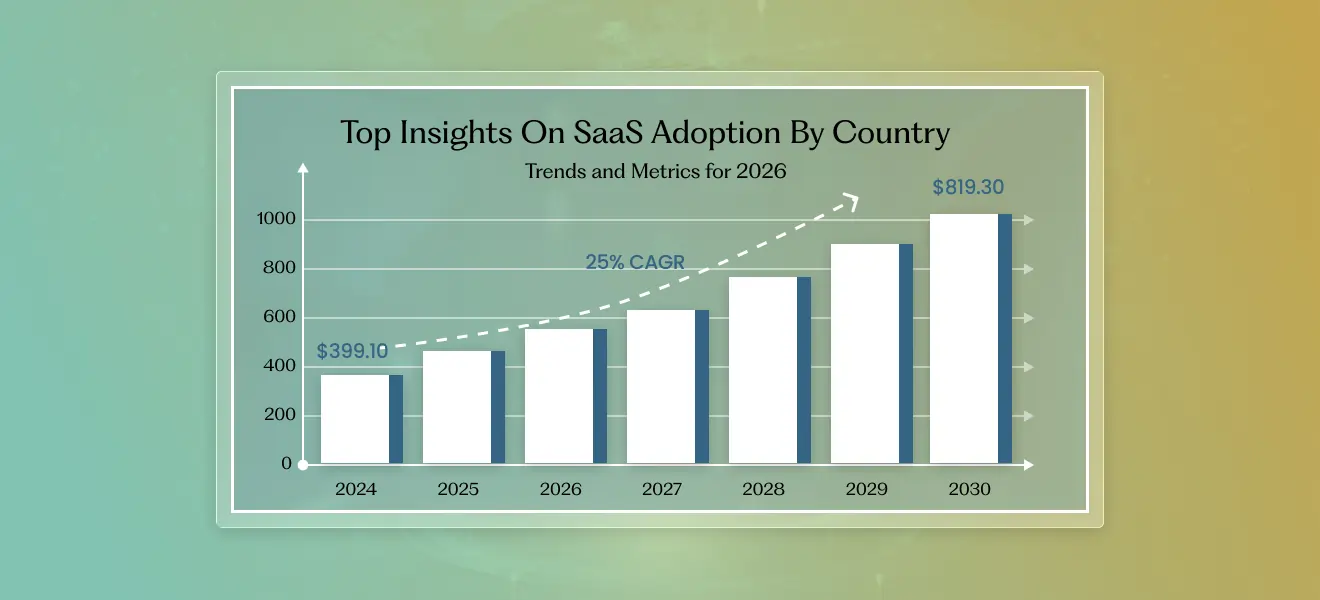
The global SaaS market is predicted to hit $1.25 trillion by 2034, and it’s growing fast – at a rate of 13.3% each year. One of the reasons SaaS solutions are so popular is because they can save you cash, scale up quickly when you need to and make it super easy to collaborate with other teams, which makes them an absolute must-have for any business looking to get their digital transformation off the ground.
Said another way – SaaS is where it’s at, and the latest stats & figures for 2026 are a real eye opener – whether we’re talking about adoption rates in different countries, market growth, or the new tech innovations that are changing the game.
To give you a better idea of the size and importance of the SaaS industry – it’s dominated by these huge public companies like Salesforce, Microsoft, and Amazon – and no surprise, they’re way out in front when it comes to market cap and innovation. The U.S. SaaS market is expected to exceed $412 billion by 2034, maintaining a significant share of the global market.
The average public SaaS company in the US has got a huge customer base and rakes it in with high annual recurring revenue, so you can bet they’re going to have a big say in the industry for a long time to come
The likes of Microsoft are pretty much the leaders in SaaS market share, with a global reach and a big chunk of the market revenue – and they’re only just one of the examples of the bigger, more established SaaS companies out there. Throw in all the smaller Enterprise SaaS companies and new Private SaaS firms that are just starting to get off the ground and you’ve got a SaaS ecosystem that’s expanding fast, with new opportunities popping up left and right.
And overall, the global SaaS market is just getting bigger and bigger – and the stats and figures provide a pretty useful snapshot of the size, growth and future potential of this really big & exciting industry. As of 2023, 95% of organizations globally report using SaaS solutions, highlighting a significant transition from traditional software models.
SaaS Market Overview
The global SaaS market is estimated to be anywhere from a healthy $300 billion to $390 billion. The United States is home to the most SaaS companies & therefore is the largest SaaS market globally. You can’t deny that SaaS growth in emerging markets like India & Brazil is pretty rapid, thanks to SMBs driving adoption & local SaaS vendors really starting to make some noise.
Its worth noting that the US also accounts for a big chunk of global SaaS spending & thats no surprise given the sheer number of SaaS companies calling it home. Europe’s SaaS market isnt to be overlooked either – plenty of European SaaS companies are really making a name for themselves.
Its fair to say that the competitive landscape in the SaaS industry is pretty intense, with a whole bunch of SaaS companies jostling for a bigger slice of the market. What we’re seeing is more & more organisations opting out of traditional on-premise software & instead plumping for cloud-based SaaS applications – this is part of a much broader trend towards cloud solutions right across industries
As a result, organisations are becoming much more savvy about how they manage their SaaS spend, making a real effort to keep track of their SaaS purchases & make sure they’re getting the most out of what they pay for – all in the interests of staying lean & mean & keeping an eye on the bottom line.
Global SaaS Trends
The global SaaS market is in the middle of a boom , driven by the fact that nearly everybody is moving their operations to the cloud , and businesses are desperate for that bit of extra flexibility & speed. One of the most exciting things at the moment is how companies are now integrating artificial intelligence (AI) and machine learning (ML) into their SaaS applications – and we’re not just talking about a few early adopters, this really is going mainstream.
New figures suggest that by 2026 a whopping 95% of all organisations will be using AI-powered saas tools within their SaaS setup, with over half of those already making the most of generative AI to boost productivity and make better decisions. This huge upswing in AI adoption is sending the global AI software market charging towards a predicted $80.6 billion valuation by 2031, with growth rates that are nothing short of stunning.
Another key force shaping the SaaS market is the growing importance of customer experience. SaaS companies are pouring serious cash into making their interfaces a breeze to use – and this means not just making them pretty but actually streamlining workflows to improve overall user satisfaction. At the same time as businesses are moving to the cloud, the likes of Amazon Web Services (AWS), Microsoft Azure and Google Cloud are just getting stronger & stronger – offering the kind of scalability & security that SaaS customers are looking for.
The European SaaS market is also really starting to flex its muscles, with revenues set to hit $95 billion by 2025. This kind of rapid expansion is just one sign that SaaS adoption is a truly global phenomenon, with businesses all over the world looking to put themselves on the cloud to stay ahead of the competition. The European SaaS market is projected to generate $95.02 billion in revenue in 2025, indicating significant growth in that region.
SaaS Business Model
The SaaS business model is built around subscription fees – customers pay for access to software services on a regular basis. Equity-backed SaaS companies really drive the train in this sector – the funding they get helps them grow, invest and carve out a place for themselves in the competitive world of SaaS. As a result, the model offers a pretty predictable income stream for the SaaS providers – and cuts down on the costs of sales and marketing by keeping customers on board.
SaaS companies – both public and private ones – come up with different pricing plans to suit their customers, whether that’s a tiered set of options, charging by usage or straight up a flat rate. And private SaaS companies can really help the market break down into different chunks – and investors love to take a closer look at their growth and how well they hang onto customers.
Customer success is right at the top of the agenda – which is why so many SaaS businesses are pouring a lot of money into getting support and success teams up and running. Security is also really high up on the list – which means SaaS businesses are implementing strong measures to keep customer data safe and make sure they’re following the rules.
Venture capital is where a lot of SaaS companies get the cash they need to get started and grow – and that helps them expand across the industry.
SaaS Applications and Usage
SaaS applications stretch into all sorts of different industries – think CRM, managing projects and all sorts of financial software – and already some pretty key players have made a big name for themselves in this space such as Salesforce , Microsoft Office 365 and Google Workspace .
These SaaS applications have kinda become the backbone of business operations – they’re indispensable. And use of SaaS apps is shooting up pretty fast all across the board – as companies get bigger and start to consolidate their SaaS offerings , its all about supporting that digital transformation and getting really efficient.
The adoption of SaaS applications keeps on gaining speed because of all the benefits they offer – boosting productivity , keeping costs down and making it way easier for staff to work together.
More and more businesses are using SaaS solutions to automate loads of the boring stuff and get that digital transformation underway – just streamlining processes and getting everything working more smoothly. And as SaaS adoption keeps on growing fast, organizations are keeping a close eye on who’s using what (saas) and putting SaaS management strategies in place to get the most out of their SaaS portfolios, keep an eye on the finances and not let security go to pot. 42% of organizations have reduced SaaS spending due to budget pressures, signaling a more cautious approach to software expenses.
Spotting and getting rid of SaaS offerings that don’t actually get used is pretty vital – its the way to get rid of waste and really drive home that operational efficiency even further.
Cloud Platforms and SaaS
Cloud platforms are the backbone of how SaaS software solutions get delivered, hosted and distributed to the far reaches of the globe. The big three – Amazon Web Services (AWS), Microsoft Azure, and Google Cloud Platform (GCP) – all offer scalability, flexibility, and the cost savings that help businesses expand and stay secure.
It’s not hard to see why public cloud services have become so widespread – they’ve played a key role in making SaaS solutions more scalable and secure, allowing businesses to grow and protect themselves more easily.
When it comes to SaaS providers, security in the cloud is top priority – they’re investing big in the latest protections to keep data safe. And for organizations that want total control and to meet specific regulatory requirements, private cloud deployment models can be the way to go – offering the extra oversight and alignment you need.
Cloud platforms also enable SaaS companies to innovate, to rapidly bring new features and services to market that meet changing customer needs. And private cloud companies are making a real impact on SaaS revenue and market share – often outperforming public SaaS companies in key metrics.
SaaS Market Share and Key Players
The SaaS market is pretty cutthroat, with top dogs like Salesforce, Microsoft, and Amazon really dominating the market share – and other big players like Google, Oracle, and SAP also hold a lot of sway. The rapid growth of the SaaS market is driving these big players to expand their reach and invest in new tech.
Market share dynamics are going to change though as SaaS startups and smaller companies start to make their mark. Meanwhile these big players continue to pour money into research and development – keeping their fingers on the pulse of what’s new and exciting and helping them maintain their dominant position. The increased demand for SaaS services is driving all sorts of business innovation and efficiency across industries.
Most Successful SaaS Companies
The SaaS industry owes a lot to a handful of ground-breakers which have set the pace for innovation, customer connection, and market dominance. Salesforce takes centre stage as a global powerhouse in CRM, boasting a market capitalization of a staggering $200billion plus, and it is widely regarded for being at the forefront of cloud-based CRM – they have literally led the charge.
Microsoft has also successfully carved out its reputation in the SaaS market via its Azure cloud platform – the breadth of the enterprise SaaS applications and services that is now running across the world thanks to it is huge.
Amazon and AWS have done a complete overhaul of the delivery of cloud based solutions – it now offers everything a SaaS provider or customer might need, from raw computing power to sophisticated database management.
And let’s not forget the big hitters – companies like Zoom, Slack and Dropbox have taken the old business models and simply turned them upside down – introducing innovative SaaS tools that have literally become an essential part of getting work done and staying in touch while on the move.
The global reach of the SaaS industry is plain as day due to the sheer number of SaaS companies you can find all over the world – an eye-watering 30,800 and counting – serving millions of users in all sorts of sectors.
These companies have managed to pull off some truly remarkable market capitalisation and influence by being able to keep their finger on the pulse of their customers, continually pushing the boundaries of what’s possible with software and always striving to make the customer experience as seamless as possible. Security remains a top priority for SaaS organizations, with evolving threats demanding advanced solutions. And their success stories serve as a reminder what a fast paced and rapidly expanding beast the global SaaS market is.
SaaS Security and Efficiency
Security really is a top priority for SaaS companies because they’re constantly facing threats like data breaches, phishing scams & those nasty DoS attacks . All too often SaaS misconfigurations are the root cause of a company’s vulnerabilities, so you need to keep a close eye on them to prevent those pesky data breaches and the reputational damage that usually follows.
Furthermore, security risks tied to adoption of decentralized SaaS and insider threats further muddy the whole picture. To minimize risks, SaaS providers invest in really solid security foundations & keep on top of things through continuous monitoring.
Getting things done efficiently is just as important – many SaaS outfits are turning to automation & AI to streamline their operations and speed up their software delivery. Customer success remains a big deal, with teams specializing in making sure that customers get the top-notch support and satisfaction they deserve. The fine print on software & cloud contracts is also pretty key to making sure your SaaS deployments are on the straight and narrow – keeping you out of hot water by ensuring compliance and reducing risk.
SaaS and Customer Relationship Management
Customer relationship management (CRM) is a real game-changer for SaaS applications. And for good reason – top notch CRM platforms like Salesforce, Microsoft Dynamics & Oracle CRM are equipping businesses with all the tools they need to elevate sales, improve customer service, and boost customer retention thats never easy to do. SaaS platforms are playing a vital role in supporting digital transformation, automation, and compliance across heaps of various industries.
The adoption of CRM SaaS solutions is exploding rapidly as companies are desperate to strengthen relationships with their customers & get some actionable insights that actually make a difference. SaaS organizations are now putting all sorts of robust security measures & innovative pricing models in place to win & keep customers, while at the same time their providers continue to beef up their CRM offerings by investing in new features that support customer engagement & business growth.
FAQs
What is the 3 3 2 2 2 rule of SaaS?
The 3 3 2 2 2 rule of SaaS is some kind of guideline that outlines key performance metrics for SaaS companies – and its all about growth, efficiency and customer success. It pretty much always refers to targets like 3 years to profitability, 3x customer retention, and a bunch of other ratios that help SaaS businesses get a sense of how well they’re doing and whether they can scale their business.
What is the rule of 65 in SaaS?
The rule of 65 in SaaS is basically a benchmark where a SaaS company aims to get a combined growth rate & profit margin of at least 65%. This rule helps keep growth in check with profitability – so the business doesn’t just go bust.Its worth noting that the US also accounts for a big chunk of global SaaS spending & thats no surprise given the sheer number of SaaS companies calling it home. Europe’s SaaS market isnt to be overlooked either – plenty of European SaaS companies are really making a name for themselves.
What is the rule of 40 in SaaS?
The rule of 40 in SaaS is a financial metric that says a SaaS companies combined growth rate & profit margin should be at least 40%. This rule is used by investors & companies to get a sense of whether a SaaS business is actually healthy and running efficiently.
How many SaaS companies are in the US?
The United States is home to a massive number of SaaS companies – we’re talking over 17,000 firms. And that’s a pretty big deal – it reflects the country’s dominance in the global SaaS market and its strong tech ecosystem.
How big is the SaaS market in the world?
The global SaaS market size is estimated to be somewhere between $300 billion & $390 billion at the moment – and we’re expecting it to hit $1.25 trillion by 2034. That’s a pretty significant market size that really underscores just how important SaaS is in the digital transformation world. Another key force shaping the SaaS market is the growing importance of customer experience. SaaS companies are pouring serious cash into making their interfaces a breeze to use – and this means not just making them pretty but actually streamlining workflows to improve overall user satisfaction. At the same time as businesses are moving to the cloud, the likes of Amazon Web Services (AWS), Microsoft Azure and Google Cloud are just getting stronger & stronger – offering the kind of scalability & security that SaaS customers are looking for.
What is the rule of 40 for SaaS?
The rule of 40 for SaaS is a widely – used benchmark that takes a company’s revenue growth rate and its profit margin and adds them up. If the sum of these two metrics is 40% or higher then the company is generally considered financially healthy & efficient at balancing growth and profitability – its a simple but effective rule to follow.