Summarize This Article With AI
Figma is the go to collaborative design platform globally, changing how design teams work across borders. As a cloud based interface design tool you can create designs from scratch and collaborate in real time. Teams can work on the same file at the same time without version control headaches, making the design process smoother.
With over 13 million monthly active users worldwide Figma is a unified platform for design, prototyping and collaboration, competing with industry leaders like Adobe and its former product Adobe XD. It supports high fidelity mockups and interactive prototypes making it a tool for modern design needs.
Knowing where Figma users are located gives insights into design trends, technology adoption, company size, industries and market opportunities. As remote work changes how teams work Figma’s cloud collaboration tools enable designers, developers, brand designers and non designers to work together seamlessly. The geographic spread of Figma’s user base is the future of design workflows and international tech markets. Its unique features like real time collaboration and cloud access give it a big advantage over competitors.
This report breaks down Figma’s global reach by country and region, looking into what’s driving adoption in each market. Figma lets you create, prototype and iterate designs in real time via figma files in a web browser. Its design tool has pre loaded frames which are the basic building block for designs, making it more usable and efficient.
With features like templates, a free version to attract users and recent innovations like Dev Mode Figma is growing its influence and capabilities. From revenue differences between regions to growth in emerging markets we’ll look into the geographic patterns behind Figma’s global success. Its tools are consistently one of the most popular across UI design, prototyping, digital whiteboarding and design systems.
Top Countries Companies Using Figma Worldwide
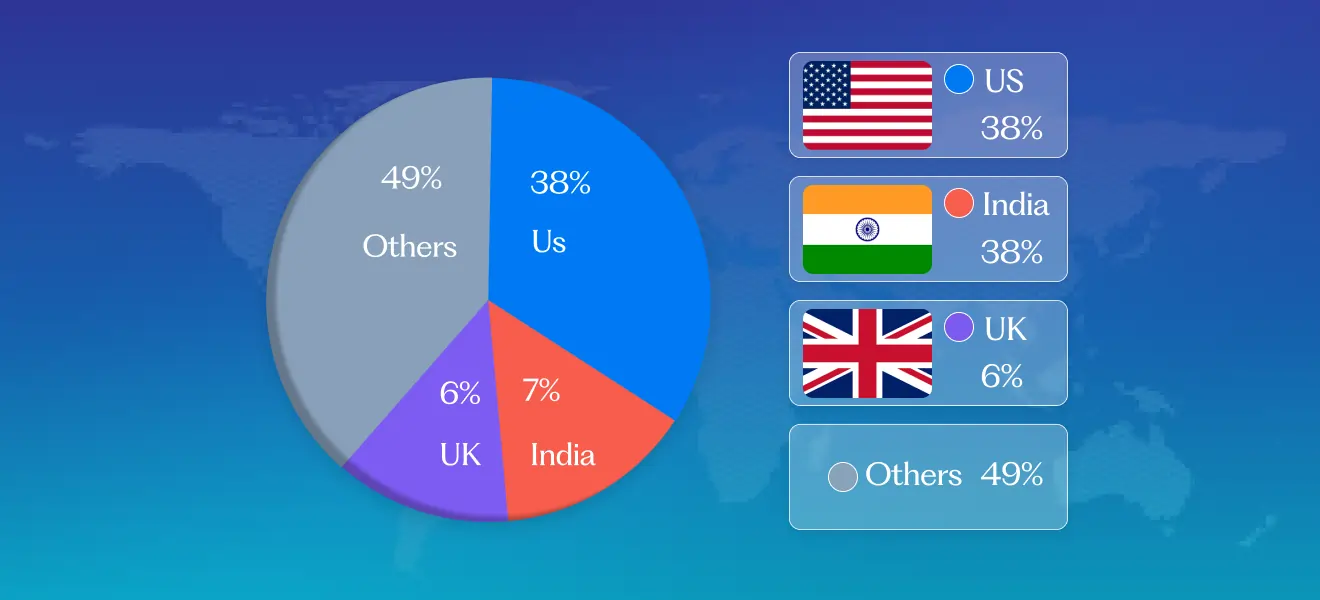
Figma’s customer distribution shows a clear market leader. The US is the largest Figma user base, 38% of all users and 25,746 companies using Figma on the platform. Brazil is 3rd in Figma usage, 8.55% of its users, big growth in the global market.
That’s 2 out of every 5 Figma users in America, reflecting both the maturity of the US design software market and Figma’s success with American businesses. Among these, the top industries using Figma in each country are Information Technology, Computer Software and Marketing and Advertising, with a lot of companies in these sectors driving adoption.
India is the 2nd largest market globally, 7% of Figma’s total user base and 4,700 companies using Figma. India can’t be ignored – Figma serves users in 85% of India’s 28 states, massive geographic penetration in the country.
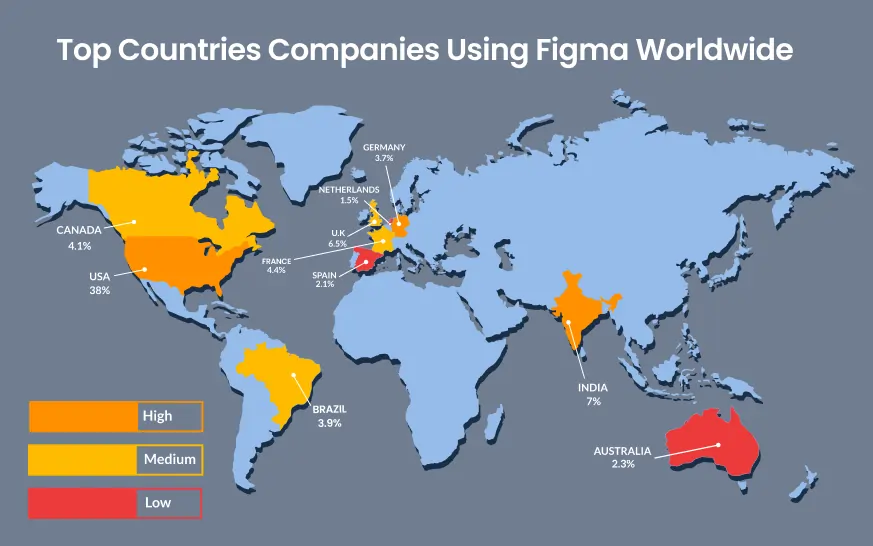
India emerges as the second-largest market globally, representing 7% of Figma’s total user base with approximately 4,700 companies actively using the design tool. The strategic importance of India cannot be overstated – Figma serves users across 85% of India’s 28 official states, demonstrating aggressive geographic penetration within the country.
| Country | Users (%) | Companies | Market Position |
|---|---|---|---|
| United States | 38% | 25,746 | Market leader |
| India | 7% | 4,452 | Secondary market |
| United Kingdom | 6.5% | 4,382 | Third largest |
| France | 4.4% | 2,940 | European leader |
| Brazil | 3.9% | 2,661 | Latin America leader |
| Canada | 4.1% | 2,773 | North America secondary |
| Germany | 3.7% | 2,486 | European market |
| Australia | 2.3% | 1,585 | Asia-Pacific |
| Netherlands | 1.5% | 1,033 | Smaller European market |
| Spain | 2.1% | ~1,400 | Mediterranean market |
In these top countries, Figma is used by companies of varying employee size, with a notable concentration among organizations with 50-200 employees, but also significant adoption by both small startups and large enterprises.
The data methodology combines company usage stats, web traffic analytics and Figma’s own user metrics. These numbers are companies using Figma not individual user accounts, so a better picture of organizational adoption.
When considering Figma’s market position, it stands out among design tools, but in terms of user base and market share, it is often compared to other creative software like Adobe Premiere Pro CC, which also commands a large presence in the design and multimedia software landscape.
Beyond the top markets Figma has a distributed presence in developed economies, strong in English speaking countries and tech forward European nations. Figma has penetration in smaller markets and concentrated strength in its main geographic segments.
Regional Breakdown of Figma Adoption
North America is Figma’s clear leader, with the US at 38% and Canada at 4.1% of global Figma users. Together, North America accounts for over 42% of Figma adoption, thanks to its mature tech industry, established design community, and early use of collaborative design tools. Many companies here use Figma to support regional collaboration and streamline design workflows.
The Asia-Pacific region is growing quickly, with India representing 7% of global users. The Figma community in India has grown to over 25,000 members through the “Friends of Figma” initiative, building an ecosystem beyond just tool use. Japan contributes 3.62% of desktop traffic to figma.com and shows high user engagement. Figma continues expanding in Asia-Pacific, helping design teams collaborate more efficiently.
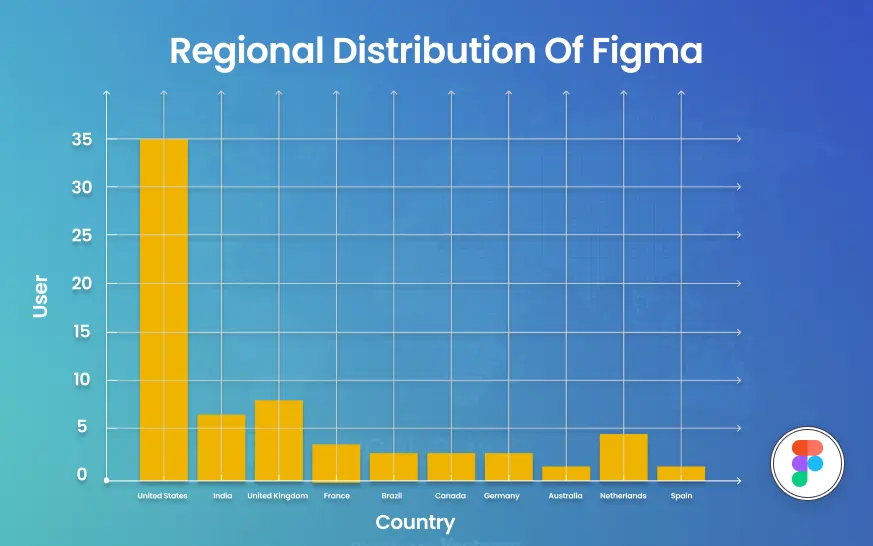
Latin America is a key growth region, with Brazil accounting for 3.9% of users and serving as the regional hub for Figma adoption. Brazil represents about 8.5% of Figma’s customer companies, showing the platform’s strong appeal beyond English-speaking markets. Figma continues to grow rapidly in Latin America, where teams use it to streamline workflows and collaborate effectively.
European adoption is spread across several countries rather than dominated by one. The UK leads Europe at 6.5%, with around 7,200 companies using Figma, followed by France (4.4%) and Germany (3.7%). This reflects Europe’s diverse markets and varying technology adoption rates.
International markets are growing faster than the US, indicating that Figma’s user base will become increasingly global over time.
User Distribution vs Revenue Distribution by Country
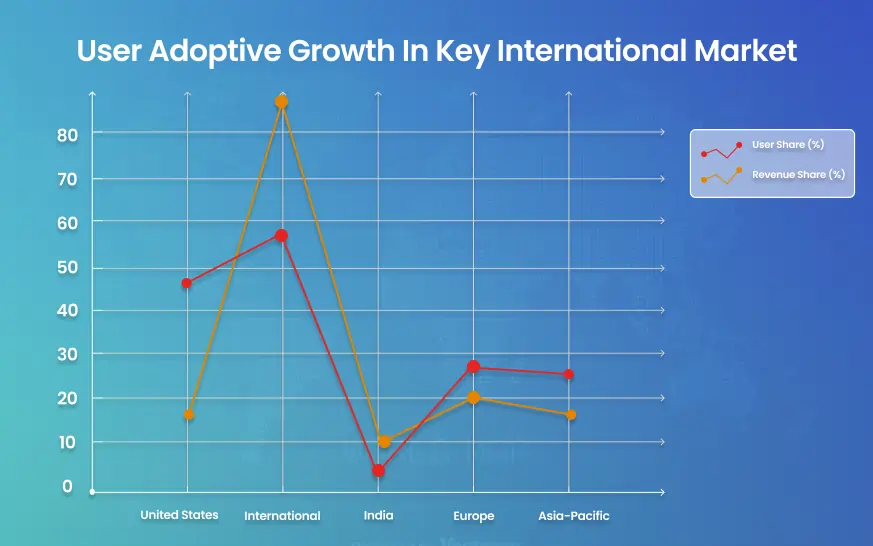
There’s a big gap between where Figma users are and where revenue is being generated. 85% of Figma’s weekly active users are outside the US, but only 53% of the revenue comes from outside the US. This means US based customers are generating way more revenue per user than international customers.
The revenue concentration in the US means several interesting market dynamics. US companies using Figma tend to be on higher tier enterprise plans, which means they have more purchasing power and more mature procurement processes. Enterprise customers in the US market are likely larger deal sizes and more comprehensive platform implementations.
| Region | User Share (%) | Revenue Share (%) | Revenue Multiple |
|---|---|---|---|
| United States | 15% | 47% | 3.1x |
| International | 85% | 53% | 0.6x |
| India | 11% | ~4% | 0.4x |
| Europe | 20% | ~25% | 1.25x |
| Asia-Pacific | 25% | ~15% | 0.6x |
This revenue gap tells us a lot about Figma’s monetization strategy across different markets. They are building user base aggressively in international markets and optimizing revenue extraction in more mature markets like the US. European markets have better revenue to user ratio than other international regions, which means stronger enterprise adoption or higher pricing acceptance.
The gap between user concentration and revenue generation is both a challenge and an opportunity. International markets are a big revenue growth potential if Figma can improve monetization through better enterprise penetration, premium feature adoption or strategic pricing adjustments to local market conditions.
Growth Patterns in Key International Markets
India’s rapid Figma adoption is driven by its booming tech sector and growing startup ecosystem. With users in 85% of Indian states and over 40% of top Bombay Stock Exchange companies as Figma customers, the country shows both wide reach and strong enterprise use.
India generates over 800,000 prototypes through Figma Make, reflecting high engagement with advanced features. To support this growth, Figma introduced tools like Figma Buzz, Figma Make, and Dev Mode, enhancing marketing, prototyping, and developer collaboration.
This growth mirrors improvements in technology infrastructure and rising digital design sophistication. As India’s tech sector matures, Figma’s early presence positions it well for continued expansion. Features like Dev Mode, which offers developer inspection tools and code snippets, further boost engagement among developers.
Brazil’s emergence as Latin America’s figma design hub reflects the region’s growing tech sector and rising adoption of modern design workflows. The country’s position as the fifth-largest market globally shows Figma’s appeal beyond traditional tech markets into emerging economies with developing design industries.
European markets show steady but fragmented growth. Instead of one dominant leader, adoption is spread across the UK, France, and Germany, reflecting Europe’s diverse business cultures and varying technology adoption rates.
Asian markets beyond India show modest but promising growth. China accounts for 4.32% of desktop traffic to figma.com, while Japan has high user engagement. These markets offer significant long-term opportunities as design sophistication and collaborative workflows increase.
Industry Distribution Affecting Geographic Adoption
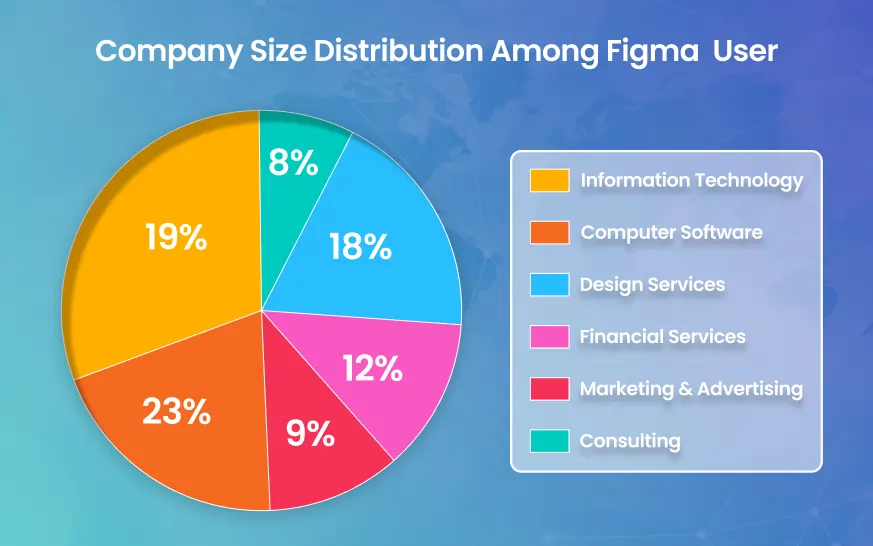
The top industries driving Figma adoption globally are Information Technology and Services (19%), Computer Software (15%), and Marketing & Advertising (6%). This concentration among top industries explains much of the geographic distribution patterns, as countries with stronger technology sectors naturally show higher Figma penetration rates. The United States’ dominance partly reflects its massive technology industry concentration.
Computer Software companies account for 15% of Figma users worldwide, further reinforcing the platform’s strength in technology-forward markets. This industry concentration helps explain why countries like India, with rapidly growing software sectors, show such strong adoption patterns despite being emerging markets.
| Industry | Global Share (%) | Primary Geographic Concentration |
|---|---|---|
| Information Technology | 19% | US, India, UK |
| Computer Software | 15% | US, India, Canada |
| Marketing & Advertising | 6% | US, UK, Australia |
| Financial Services | 8% | US, UK, Germany |
| Design Services | 12% | US, UK, Netherlands |
| Consulting | 5% | US, India, Germany |
Marketing and Advertising industries contribute 6% of customers globally, with particularly strong representation in English-speaking markets where advertising agencies have embraced collaborative design tools early. This sector’s adoption patterns help explain strong penetration in markets like Australia and the UK.
Within the Design Services sector (12% global share), brand designers benefit from Figma’s specialized tools, such as Figma Buzz, which help create, manage, and maintain brand assets and consistency across campaigns in real-time collaboration.
The geographic concentration of specific industries creates natural clusters of Figma design adoption. Financial services companies, representing 8% of users, concentrate heavily in established financial centers like New York, London, and Frankfurt, driving adoption in their respective countries.
Industry distribution patterns suggest that countries developing stronger technology and creative sectors will likely see accelerated Figma adoption over time. As digital transformation spreads globally, the platform’s industry concentration advantages—especially features like design systems for maintaining brand consistency and efficiency—position it well for international expansion.
Company Size Distribution by Country
Small companies with an employee size of less than 50 make up 44% of figma customers globally, but this varies greatly by country. The US has a higher concentration of larger enterprise customers while international markets skew towards smaller companies and startups based on employee size.
Companies with 1-50 employees are the largest user segment globally and are particularly strong in emerging markets like India and Brazil. This is due to the entrepreneurial ecosystems in these countries and Figma’s effectiveness as a design tool for lean, agile teams.
Mid-sized companies with 100-1000 employees make up 42% of figma users globally and are relatively evenly distributed across major markets. This is the sweet spot for Figma’s collaborative features as these companies are big enough to benefit from team coordination tools but small enough to adopt new platforms quickly.
| Company Size | Global Share (%) | US Concentration | International Concentration |
|---|---|---|---|
| 1-50 employees | 44% | 35% | 48% |
| 100-1000 employees | 42% | 45% | 41% |
| 1000+ employees | 13% | 20% | 11% |
Large enterprises with 1000+ employees make up only 13% of users globally but are big revenue segments due to higher spend. The US has much higher enterprise penetration with nearly 95% of Fortune 500 companies using Figma in their workflow. This enterprise dominance explains the revenue concentration in the US markets.
International markets have stronger representation of smaller companies, due to different economic structures and Figma’s success in capturing emerging tech companies worldwide. As these smaller international companies grow they will be big revenue opportunities for the platform.
Market Penetration and Future Growth Opportunities
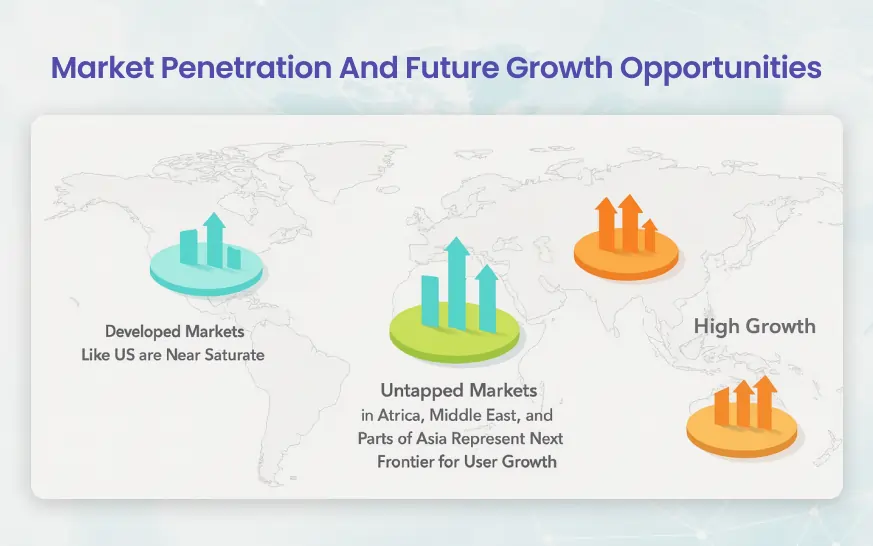
Figma has 40.65% market share in the design tools category, demonstrating clear leadership as a unified platform that combines design, prototyping, and code generation. However, penetration varies greatly by geography. Developed markets like the US are near saturation among target customer segments, while emerging markets remain a massive opportunity.
Figma continues to expand its reach, with untapped markets in Africa, the Middle East, and parts of Asia representing the next frontier for user growth. Design hubs for Figma users are emerging in Eastern Europe, Asia, and Africa. These regions are currently underrepresented in user stats but have huge long-term potential as tech infrastructure improves and design sophistication increases among local companies.
The revenue gap between user concentration and financial contribution is a significant opportunity to monetize better in international markets. If Figma could achieve US revenue per user in these regions, total revenue could double while maintaining current user growth. Figma introduced new features like Figma Buzz and Figma Make, and in 2023, Figma launched Dev Mode to streamline workflows and support this ongoing expansion.
Competition varies greatly across different geographies. While Figma is dominant in most Western markets, local design tool preferences and competitive landscape create different challenges in each region. Understanding these regional competitive dynamics will be key to growth in international markets.
Market entry challenges include localization requirements, local partnership needs, and different customer buying processes across countries. Success in new markets will likely require tailored go-to-market strategies rather than just copying what worked in established markets.
Factors Influencing Geographic Adoption
Remote work trends have accelerated Figma adoption globally but the impact varies greatly across countries with different work culture patterns. Countries that had remote work before 2020 had faster Figma adoption, while markets where in-person collaboration was dominant took longer to adopt cloud-native design workflows.
Technology industry concentration is the strongest predictor of Figma design adoption in any given country. Markets with strong startup ecosystem, established tech companies and high venture capital activity have higher platform penetration rates.
Internet infrastructure and cloud adoption directly impact collaborative design tool success. Countries with reliable high-speed internet and established cloud services have much higher Figma adoption than regions with limited internet or cloud comfort.
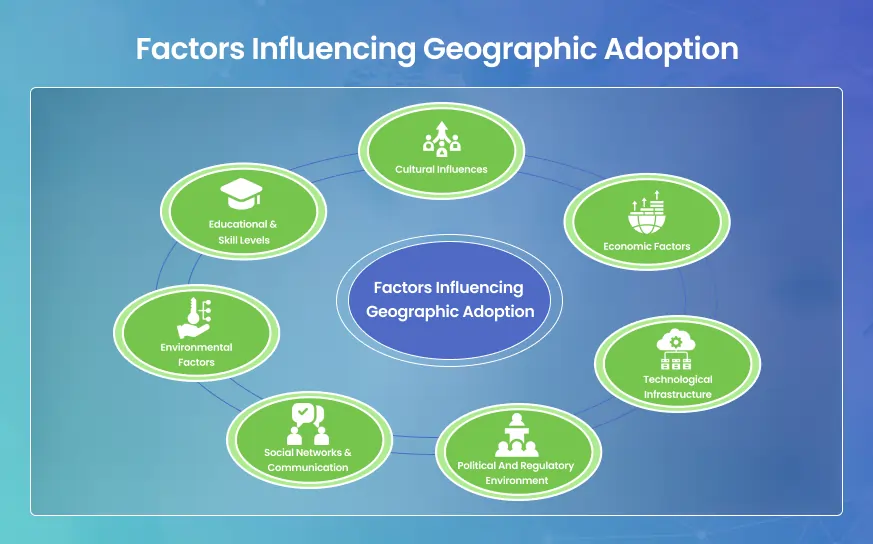
Local design tool preferences and competitive landscapes create notable variations in adoption. Some markets favor local tools or have strong ties to competing platforms, slowing Figma’s growth despite its technical strengths.
Educational ecosystems foster long-term adoption. Countries with design schools teaching Figma build a steady user pipeline. Initiatives like “Friends of Figma” and ready-made templates help students and educators adopt the platform easily.
Language and culture affect adoption speed, but Figma’s visual design reduces barriers compared to text-heavy software. English-speaking markets adopt faster, though localization is improving access in other regions. Figma also welcomes non-designers, making design accessible to all users regardless of background.
Conclusion Figma
Figma’s user base is growing globally, with the US leading at 38% and India at 7%. There is a gap between user location and revenue, with 85% of users outside the US but only 53% of revenue from those markets. This shows growth potential in international regions as enterprise adoption rises. Figma’s real-time collaboration and cloud platform help teams work seamlessly across borders. Its success in diverse markets highlights the universal need for modern design workflows.
FAQs
How many Figma users are there?
As of 2026, Figma has over 13 million monthly active users worldwide, including designers, developers, brand designers and non-designers from various industries and countries.
Is Figma still good in 2026?
Yes, Figma is one of the top collaborative design tools in 2026 with new features like Dev Mode and AI tools. Its cloud-based platform supports real-time collaboration making it super relevant for modern design workflows.
Who is Figma’s biggest competitor?
Figma’s biggest competitors are Adobe XD, Sketch and InVision. But with Adobe XD discontinued and Figma’s strong market share and collaborative features, it’s currently leading the UI/UX design tool market.
Is Figma a Chinese company?
No, Figma is not a Chinese company. It was founded in the US by Dylan Field and Evan Wallace and is a global cloud-based design platform headquartered in the US.
Which countries have graphic designers in demand?
Graphic designers are in high demand in countries with strong tech and creative sectors like the US, India, UK, Brazil and parts of Europe and Asia-Pacific.
Why is Figma declining?
Figma is not declining; it’s growing and expanding globally. But challenges like regional competition, monetization gaps in international markets and evolving user needs require ongoing innovation and adaptation.
Is Figma harder than Canva?
Figma is generally more advanced and feature-rich than Canva. Figma is for professional designers and teams while Canva is for beginners or non-designers creating simple graphics.