


Summarize This Article With AI
Ghost commerce means an online business where entrepreneurs sell products online without managing physical inventory. In other words, ghost commerce means online businesses without a physical storefront or inventory, selling products from third-party suppliers. Unlike other business models like affiliate marketing and dropshipping, ghost commerce offers flexibility and scalability so you can choose what works best for you.
Unlike traditional e commerce where businesses need to maintain inventory and have a physical storefront, ghost commerce businesses don’t need a physical storefront which saves on overhead. Traditional e-commerce businesses develop or manage their own products giving them more control over quality and branding, ghost commerce relies on third-party suppliers.
Also ghost commerce businesses don’t need to manage inventory or engage in inventory management as that’s handled by suppliers. This model relies on third-party suppliers for inventory management and fulfillment, no upfront capital investment required. Ghost commerce businesses can operate with minimal overhead costs, perfect for new entrepreneurs. The ghost commerce model offers flexibility and scalability so you can adapt to market trends quickly.
Ghost commerce means a business model that minimizes financial risk by outsourcing inventory and fulfillment so you can focus on building your brand and marketing. Affiliate marketing is a popular ghost commerce model where you promote products from other companies and earn commissions. This way ghost commerce retailers can test new products without the hassle of unsold stock. The model works for physical products, digital products and print on demand products.
Key Components of Ghost Commerce
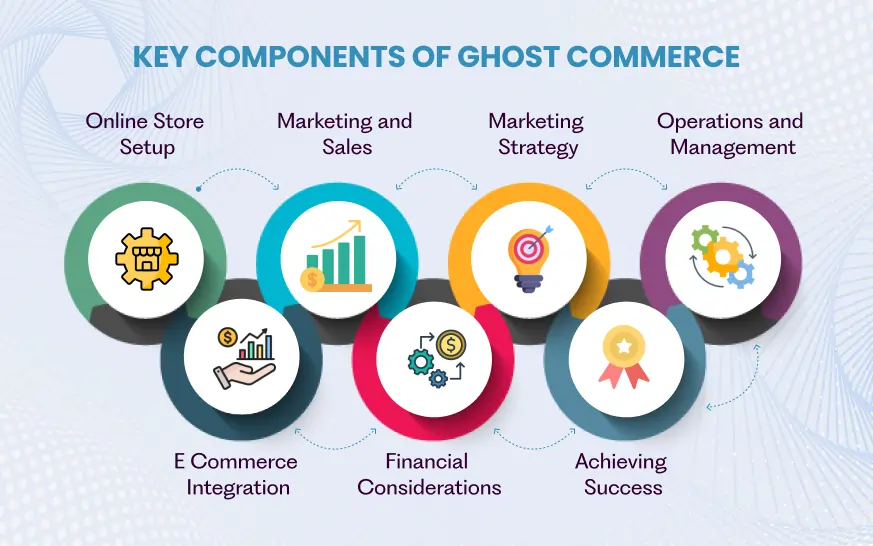
Online Store Setup
Setting up an online store is a key part of ghost commerce, you need a strong online presence to attract customers. Online businesses can use ecommerce ghost commerce platforms like Shopify or WooCommerce to create a professional and user friendly online store.
Choosing the right online platform is crucial to launching a ghost commerce business as it gives you the digital environment and access to supplier partnerships. A well designed online store can build trust with potential customers and increase conversions. Effective online store setup also involves search engine optimization (SEO) to get visibility in search engines.
A ghost commerce site should be optimized for desktop and mobile, most online shopping happens on mobile. Fast loading times, easy navigation and secure payment gateways will enhance the customer experience. Customer reviews and testimonials can also improve the brand reputation, customer trust and repeat business.
Marketing and Sales
Marketing Strategies
Marketing is key to a ghost commerce business, social media marketing, email marketing and affiliate relationships. Businesses can use social media to reach their target market and sell. Content creation is also important for ghost commerce, to build brand awareness and authority in a very specific niche. Marketing should be about providing value to the customer and building an online presence.
Effective digital marketing campaigns for the ghost commerce business model can drive traffic and conversions. Influencer partnerships and native advertising can expand reach and credibility. Plus data analytics tools allow ghost commerce entrepreneurs to track customer behavior and refine their marketing for better targeting and return on investment. Monitoring marketing is crucial as it affects profit margins and overall business success.
Marketing Strategy
A marketing strategy for ghost commerce is understanding customer behavior and preferences. Businesses should do market research to find their target market and create targeted marketing. Marketing should include SEO to get visibility in search engines and organic traffic. Good marketing can help ghost commerce businesses stand out in a crowded market and sell.
Personalization in marketing communications can engage the customer, turn one time buyers into repeat customers. Email marketing campaigns with personalized recommendations and promotions based on purchase history or browsing behavior can increase repeat purchases and customer lifetime value.
Operations and Management
Prioritize Customer Service
Support is key for ghost commerce businesses as it can make or break a business. Businesses should focus on supporting their customers, answering questions and resolving issues quickly. Customer satisfaction is the key to building a loyal customer base and repeat business. High product quality is important for customer satisfaction and protecting the brand when using 3rd party suppliers. Ghost commerce businesses should have a clear return and refund policy in place to satisfy customers.
As ghost commerce retailers don’t handle the products themselves, transparent communication with customers about shipping times and potential delays is crucial. Providing multiple support channels like live chat, email and phone support can improve customer experience and trust. Proactive follow ups after purchase can help address any concerns and reinforce the brand.
E Commerce Integration
Ecommerce integration is a must for ghost commerce businesses to manage their online store and fulfill orders. Businesses can use ecommerce integrations to connect with 3rd party suppliers, automate order fulfillment and streamline their operations. Dropshipping means working directly with a 3rd party supplier to fulfill orders. Good ecommerce integration can reduce errors, improve customer satisfaction and increase efficiency. Ghost commerce businesses should choose ecommerce integrations that fit their business needs and goals.
Automation tools can sync inventory levels, update product listings and manage pricing, reducing the manual work for ghost commerce entrepreneurs. Integrations with payment processors and shipping providers also make transactions smooth and order tracking accurate. Choosing reliable suppliers that have seamless integration is key to operational efficiency. You need to find reliable suppliers by researching and vetting them thoroughly for quality and reliability. And investing in technology and planning is key to running a ghost commerce business.
Financial Considerations
Profit Margins
Profit margins are key for ghost commerce businesses as they can be lower than ecommerce businesses. Ghost commerce businesses have lower profit margins and thin margins due to limited control over cost of goods and higher per unit costs. When considering the cons of ghost commerce, entrepreneurs should weigh the pros and cons before jumping in.
Businesses need to manage their pricing, costs and revenue to be profitable. Ghost commerce businesses can use competitive pricing or value based pricing to maximise their profit margins. Good financial management is key to long term success of a ghost commerce business.
While ghost commerce reduces upfront costs, entrepreneurs need to be mindful of marketing costs, platform fees and supplier costs. Negotiating with suppliers and optimising ad spend can help improve margins. Focusing on higher margin products or niche markets can reduce competition and increase profitability.
Achieving Success
Ghost Commerce Success
A successful ghost commerce business is built on niche selection, supplier partnerships and online presence. For ghost commerce today innovation and adaptability is key to success in the digital market. When starting a ghost commerce business you should consider platform, profitability and operational challenges. To start a ghost commerce venture the low barriers to entry and minimal logistical worries make it accessible to many.
If you want to start ghost commerce start by choosing a profitable niche, partner with trustworthy suppliers and set up your online store. Understanding how ghost commerce works is important: it integrates marketing and affiliate relationships to sell without inventory. A ghost commerce retailer doesn’t have direct involvement in inventory management or fulfillment, they rely on 3rd party suppliers for order processing.
To succeed in ghost commerce you need a combination of good marketing, great customer service and efficient operations. Businesses should focus on building an online presence, providing value to customers and building a customer base. Ghost commerce success also depends on being able to adapt to market trends and customer preferences. By following these strategies ghost commerce businesses can have long term success and revenue growth.
Promoting ghost commerce products involves using native advertising platforms and audience targeting to reach buyers. Selling services online is also part of the ghost commerce model, you can sell digital products or solutions without physical inventory.
When a customer places an order the process is automated and triggers fulfillment by 3rd party suppliers or services. This eliminates the need to manage physical stock making it easier to scale and fulfill different order volumes. Many ask if ghost commerce is legal; ghost commerce is legal within standard business practices and is a recognized model in the ecommerce industry.
Successful ghost commerce entrepreneurs also focus on building a recognizable ghost commerce brand that resonates with their target audience. Consistency in branding, quality content marketing and engagement through social media accounts can build trust and credibility. And staying up to date with industry trends and continuously optimizing the business model can help entrepreneurs stay ahead of the game in the ever changing ecommerce landscape.
Conclusion
Ghost commerce is a great way for entrepreneurs to get into e-commerce with minimal upfront investment and less operational complexity. By using third party suppliers for inventory and fulfillment, ghost commerce businesses can focus on building an online presence, executing marketing strategies and delivering great customer service.
While there are challenges like thin margins and reliance on suppliers, careful niche selection, good partnerships and continuous optimisation can lead to long term success. As a legitimate business model, ghost commerce offers flexibility, scalability and the ability for entrepreneurs to build an online business without the traditional headaches of inventory management and physical stores. Get on board with this new way of doing things and your business can thrive in today’s digital world.


